
The ecosystem that sustains Comeau's photographic practice spans three distinct yet interdependent workspaces that support the processes of capture, image development, and printmaking. I refer to this integrated studio ecosystem as Planet 49.
Capture
Image capture occurs in the field using a medium-format digital camera that produces high-resolution files. The extended tonal and spatial data contained in these files provide a robust source for subsequent development and printing.
The pursuit of "magical realism" emphasizes situating subjects within their environmental and relational contexts; accordingly, wide-angle lenses are often, though not exclusively, employed to preserve spatial continuity and contextual depth.
Image Development
The camera's digital files are developed in colour, converted to black-and-white, and prepared for output using a Photoshop-centric suite of image-processing tools.
A custom monochrome raster image processor (RIP) is used to output developed image files as full-size digital negatives onto transparent media. These are printed using custom ICC profiles on inkjet printers modified to run eight channels of monochrome carbon-based inks, calibrated specifically for platinotype processes.
Printmaking
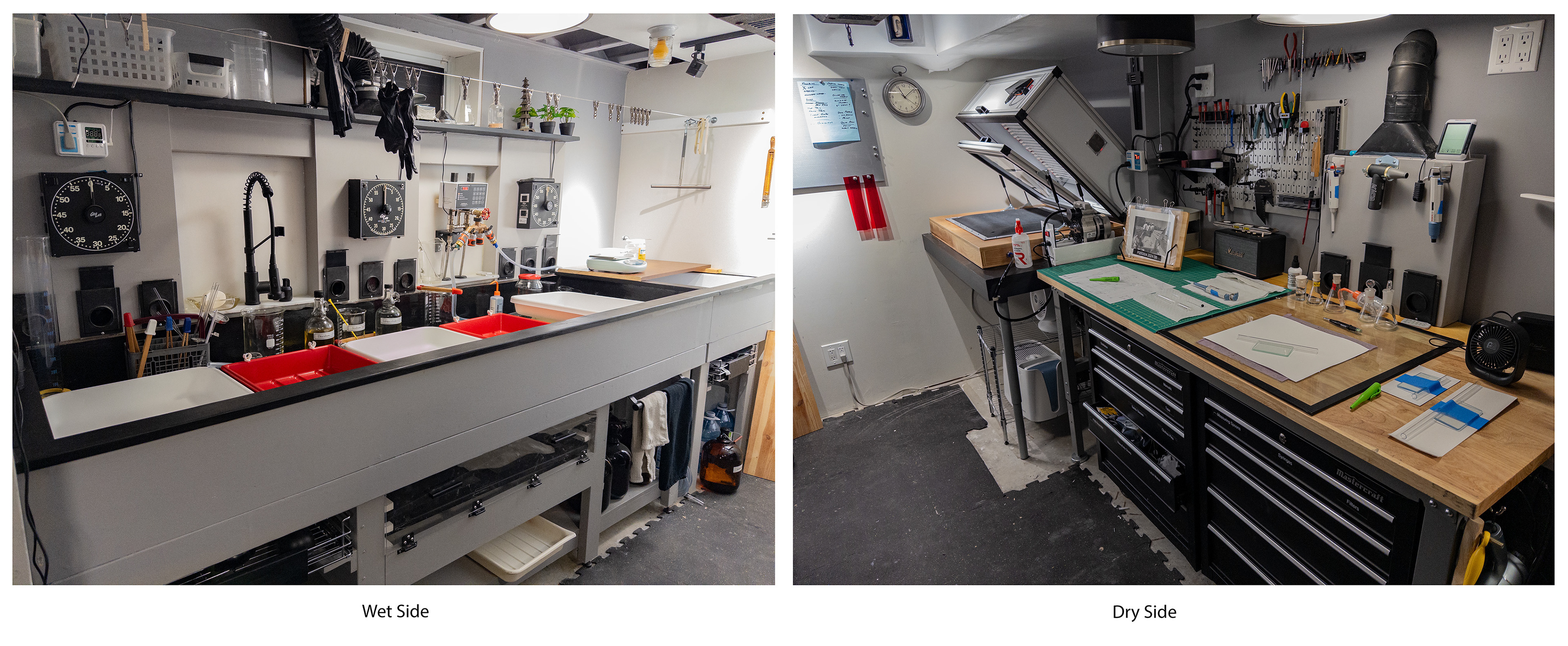
The printmaking room is divided into wet and dry working areas that differ in function from those of a traditional silver-gelatin darkroom.
On the dry side, no enlarger is employed. Paper is hand-coated with a platinum–palladium sensitizer, contact-printed with a full-scale digital negative, and exposed to ultraviolet light. When using the Malde-Ware developing-out method, the image is fully formed and visible at the end of exposure. The wet side is used exclusively to clear residual platinum–palladium salts not activated during exposure. This clearing process consists of three sequential baths: disodium EDTA, sodium sulfite, and tetrasodium EDTA, followed by a two-hour wash in water filtered to one micron.
Platinum–palladium (Pt–Pd) printing is highly sensitive to ambient temperature and relative humidity. To ensure repeatable results and a stable baseline for print evaluation, the dim room is regulated by a network of sensors, humidifiers, heaters, and ventilators that maintain conditions at 20 °C and 65 % relative humidity, with tolerances of ± 0.5 °C and ± 1 % RH.
Not visible in the photographs is the paper hydration closet, where paper is pre-hydrated prior to sensitizing and post-hydrated for at least 1 hour before exposure.
Sensitizing Paper and UV Exposure
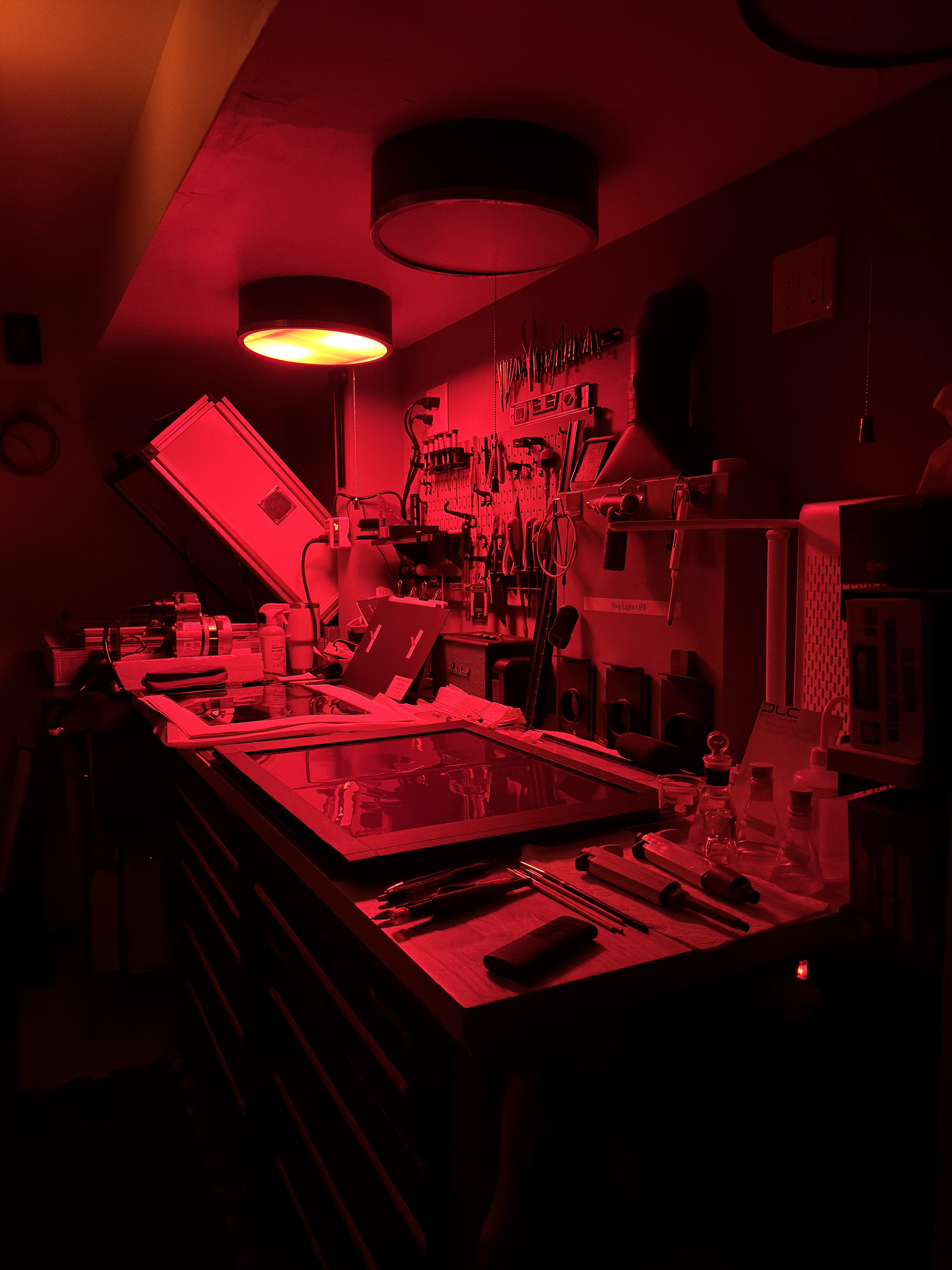
Coating pre-humidified paper with a platinum–palladium sensitizer and exposing the resulting negative–paper sandwich to ultraviolet light requires working under dim illumination that excludes blue wavelengths at the lower end of the UV spectrum.
Accordingly, the sensitizing and exposure, or “dry” side, of the printmaking room is shown here as it appears in use under Rubylith-filtered light. Because sensitizing paper, aligning full-scale negatives, and managing UV exposure involve multiple layout and measurement tools, the work is best carried out in controlled low light rather than complete darkness.